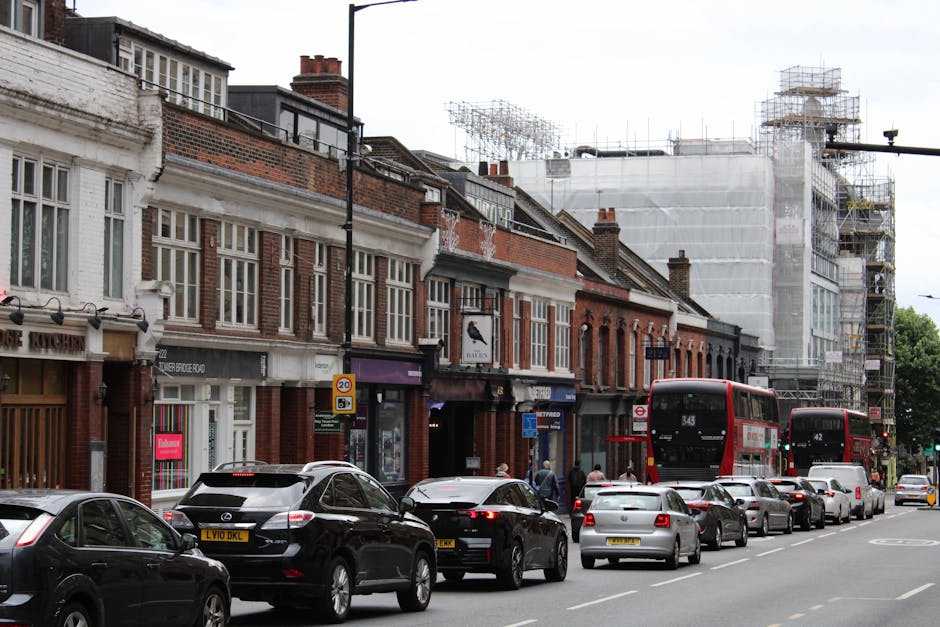
St Johns Wood office removals High Street to Lords cricket ground

Moving an office in St Johns Wood is rarely just a matter of boxes and a van. Between narrow streets, busy local traffic, parking realities, and the simple need to keep business ticking over, St Johns Wood office removals High Street to Lords cricket ground needs proper planning. If you are relocating a workspace anywhere between the High Street and Lord's cricket ground, the details matter more than people expect. One late lift booking, one missing permit, one poorly packed server cable - and suddenly the whole day gets wobbly.
This guide walks through what a local office move involves, why the area needs a slightly smarter approach, and how to keep disruption under control. You will also find practical steps, common mistakes, a checklist, and a few grounded tips from the kind of move-day experience that only seems obvious afterwards. To be fair, that is usually how office removals go.
Why St Johns Wood office removals High Street to Lords cricket ground Matters
Office removals in this part of north-west London are not like moving from a quiet industrial estate to another unit off a ring road. St Johns Wood has its own rhythm. Roads can tighten up at the worst moment, loading access may be limited, and the area around Lord's can become especially awkward on event days or when footfall picks up. If your business sits near the High Street, the planning burden rises a notch or two.
Why does that matter? Because office relocation is as much about continuity as transport. The real goal is not simply getting desks from A to B. It is keeping client work moving, protecting equipment, and making sure staff are not spending an entire Monday wondering where the printer leads went. That kind of mess has a way of spreading.
Local knowledge helps a lot. A removal team that understands office removals in St Johns Wood will usually think about parking, access times, likely bottlenecks, and the order in which items should be unloaded. That sounds small. It is not. In practice, those details decide whether a move feels controlled or chaotic.
There is also a business-image angle. If you receive clients, tenants, investors, or suppliers at the new address, you want the first day to feel professional. An office half set up, with rolling boxes in the corridor and tangled cables by reception, does not exactly inspire confidence. A smoother move protects your reputation as well as your schedule.
Expert summary: The best office moves in St Johns Wood are not necessarily the biggest or fastest. They are the ones that are planned around access, timing, and business continuity so the move is barely felt by your team.
How St Johns Wood office removals High Street to Lords cricket ground Works
At a practical level, a local office removal usually starts with a survey or call assessment. The mover checks what is being moved, how much packing is needed, whether there are fragile items, and what access looks like at both ends. In a busy London area, that access conversation is just as important as the inventory.
For example, a small consultancy moving two floors down the road may only need a van, a few crew members, and careful packing. A larger office with filing cabinets, monitors, archive boxes, and shared equipment may need a more staged approach. You may even split the move into phases so the essential team can keep working while the rest is packed and transported.
Most well-run office removals follow a basic pattern:
- Initial review of inventory, access, and timing.
- Packing and labelling of furniture, files, and equipment.
- Protection of floors, lifts, and common areas where required.
- Careful loading and secure transport.
- Delivery, placement, and reassembly at the new site.
- Final checks so the office can reopen cleanly.
That sequence sounds simple, but the quality is in the detail. A good mover will ask questions that save time later. Which desks must be live first? Who is handling IT? Are there sensitive documents? Do you need packing and unpacking services, or will your team do that in-house? A few decent answers early on prevent a lot of scrambling on the day.
In our experience, the smoother moves are the ones where one person is clearly in charge. Not every answer needs a committee. Decide who signs off the inventory, who handles building access, and who confirms the final layout. Simple, yes. But it works.
Key Benefits and Practical Advantages
The biggest advantage of using a structured office removal plan is control. You are not relying on memory, guesswork, or last-minute improvisation. You are using a process that protects your time, your equipment, and your staff's sanity. Let's face it, office moves can test everyone a bit.
Here are some of the main benefits:
- Less downtime: A better-planned move means teams can get back to work faster.
- Reduced breakage risk: Proper wrapping, labelling, and loading protect screens, chairs, IT kit, and storage.
- Better access management: Local moves near the High Street or Lord's cricket ground can be timed around traffic and building restrictions.
- Cleaner handover: A staged pack-down helps avoid losing files, chargers, or that one adapter everyone suddenly needs.
- Improved staff confidence: A calm move day feels organised, and people notice that.
- Better use of space: The new office can be arranged properly from the start rather than endlessly adjusted later.
There is also a subtle financial benefit. When a move is handled badly, the costs spread out in awkward ways: extra labour, wasted staff time, delayed work, missing items, and a day or two of reduced productivity. These are not always easy to count on a quote sheet, but they are very real.
If you are comparing options, a local provider offering office relocation services can sometimes be more helpful than a purely general mover, because the job is not just transport. It is business logistics with a time limit.
Who This Is For and When It Makes Sense
This kind of move is usually right for small and medium-sized businesses, professional practices, startups, satellite offices, consultancies, and any organisation that needs to shift premises without grinding operations to a halt. It also suits teams moving between nearby addresses in St Johns Wood where speed, parking, and careful handling matter more than brute force.
You might need a structured office removal if you are:
- expanding into a larger workspace;
- reducing overheads by moving to a smaller office;
- reconfiguring your team after growth or restructuring;
- relocating after a lease change;
- merging two offices into one;
- moving archive-heavy or equipment-heavy workspaces;
- setting up a new customer-facing office and need it presentable on day one.
Sometimes the trigger is simple. The lease ends, the rent changes, or the layout no longer works. Sometimes it is more emotional than that. Teams outgrow a space and start feeling boxed in. Truth be told, people often know it is time before the paperwork catches up.
If your office is not huge and you mainly need swift transport for desks, boxes, or small equipment, a more compact solution might be enough. In that case, a man and van service may suit short local moves, though larger office setups usually need a more formal removals plan.
Not every move needs a grand production. But every move needs a sensible one.
Step-by-Step Guidance
A good office move feels easy only because a lot of work happened before the first box was lifted. Here is a straightforward way to handle it.
1. Start with a clear inventory
List furniture, files, IT equipment, kitchen items, plants, and anything stored in cupboards or under desks. It is always the hidden items that cause the mild panic. The spare monitor in the back room. The label printer nobody remembers buying. The box of tangled cables. Classic.
2. Decide what travels and what gets left behind
Office moves are an excellent time to clear out broken chairs, outdated kit, and archive material that no longer needs to take up space. If you are donating, recycling, or disposing of items, build that into the plan early.
3. Check access at both locations
Measure lifts, stairs, entrances, and parking options. Confirm whether the building allows loading at certain times. In St Johns Wood, where streets can be busy and space can be tight, this step is non-negotiable. A move can be delayed by the smallest detail, such as a loading bay not being available when expected.
4. Protect sensitive data and equipment
Back up data, secure documents, and separate important files from general packing. Make sure IT leads know the move schedule. If server equipment is involved, handle it with proper care and allow extra time for reconnecting systems at the new site.
5. Label by room and priority
Use clear labels such as reception, finance, meeting room 1, or boardroom. Add a priority note where needed, like open first or IT last out, first in. That tiny bit of structure saves a lot of rummaging later.
6. Plan the furniture layout before move day
If possible, map where desks, cabinets, and shared equipment will go in the new space. People often skip this, then wonder why everyone is standing around pointing at walls. A rough floor plan is enough.
7. Keep the first-day essentials separate
Store chargers, stationery, printer paper, kettle items, basic tools, and critical documents in an easy-to-reach box. First-day essentials deserve their own bag or crate. Otherwise someone will be opening ten boxes before lunch looking for a power lead.
8. Build in a buffer
Even a local office removal benefits from a little extra time. Delays happen. Traffic, lift queues, building checks, weather, a missing key. London has a habit of being charmingly inconvenient just when you need it not to be.
Expert Tips for Better Results
After enough office moves, certain habits prove themselves. Here are the ones worth keeping.
- Move in phases where possible. If your business can stagger departments, you reduce pressure on the day.
- Use colour coding for rooms or teams. It makes unloading faster and cuts confusion.
- Keep one person responsible for decisions. Too many voices slow everything down.
- Schedule IT support early. Nothing drains momentum like a lovely new office with no functioning network.
- Tell staff what to pack and when. People work better when they know the plan, even if the plan is slightly messy around the edges.
- Confirm insurance and liability details before move day. It is one of those boring topics that suddenly becomes interesting if something goes wrong.
Another useful tip: do a "last look" walk-through before the van leaves. Open drawers. Check reception. Look behind doors. Sounds obvious, but a surprising number of things get left in a rush. One office once nearly moved without its spare key set. That would have been a fun afternoon, and not in a good way.
If you need additional protection for heavier items, consider whether furniture removals support is appropriate. Desks, filing cabinets, and conference tables all benefit from proper handling, especially in tighter London buildings.
Common Mistakes to Avoid
Office removals go wrong in fairly predictable ways. The good news is that most problems are avoidable if you spot them early.
- Leaving packing too late: The last week before a move is not the time to start labelling everything.
- Ignoring building rules: Access windows, lift bookings, and noise restrictions matter more than people think.
- Not backing up systems: If IT fails, the entire move can feel bigger than it is.
- Overstuffing boxes: Heavy boxes break, slow movers down, and are no fun for anyone's back.
- Skipping a floor plan: Unclear placement means wasted time at the new office.
- Forgetting staff communication: People need to know what to do, where to go, and what not to pack.
- Assuming every item is easy to move: Some equipment needs specific handling, especially fragile screens or specialist office furniture.
The most common mistake of all? Treating the move as a transport job rather than a workplace transition. That mindset shift changes everything. Once you think in terms of continuity, the rest starts to line up.
Tools, Resources and Recommendations
You do not need a mountain of specialist equipment for every office move, but the right basics help a great deal. The essentials are often plain old practical things: strong boxes, tape, labels, wrapping, floor protection, and a sensible trolly or sack truck. Not glamorous. Very effective.
Depending on the scale of the move, you may also want:
- crate systems for files or IT accessories;
- document wallets for sensitive paperwork;
- anti-static packing for electronics;
- zip bags for screws, cables, and fittings;
- marker pens in more than one colour;
- basic tools for dismantling desks and chairs;
- storage support if the new space is not ready on day one.
For businesses needing a temporary holding solution, storage can be a useful bridge between old and new premises. This is especially helpful if the new office is still being fitted out, or if you are reducing space and need to decide what stays.
You may also want to review your removal partner's support pages before confirming the job. A company that discusses insurance and safety openly is usually giving you a decent sign they take the work seriously, and that matters when laptops, monitors, and client files are involved.
Law, Compliance, Standards, or Best Practice
Office removals touch on safety, data handling, building rules, and sometimes waste disposal. The exact obligations depend on your business, the building, and what is being moved, so careful planning is wise. You do not need to turn the move into a legal project, but you should not wing it either.
At minimum, good practice usually means:
- keeping walkways clear during packing and loading;
- making sure staff are not asked to lift heavy items unsafely;
- protecting confidential paperwork and devices;
- checking whether items require special handling or disposal;
- coordinating with building management on access and timings;
- using contractors with clear insurance and public liability arrangements where appropriate.
Health and safety should never be treated as a box-tick afterthought. If your move involves heavy cabinets, stair access, awkward corridors, or bulky screens, proper lifting and handling procedures matter. A decent mover should be able to explain how they manage that. If they cannot, that is a little red flag waving politely in the corner.
You can also ask about sustainability and recycling for unwanted items. Responsible disposal is not just good manners; it is increasingly part of standard business housekeeping. Where possible, work with a team that can separate reusable, recyclable, and waste items rather than throwing everything into one pile and hoping for the best.
Options, Methods, or Comparison Table
Different office moves call for different methods. The right choice depends on size, timing, budget, and how much disruption your team can tolerate. Here is a simple comparison to help you think it through.
| Approach | Best for | Main advantage | Watch out for |
|---|---|---|---|
| Small van-based move | Compact offices, light equipment, short local moves | Quick and flexible | Limited capacity, may not suit furniture-heavy offices |
| Full office removal team | Established offices with furniture, files, and IT gear | Structured, efficient, less stress | Needs better scheduling and more preparation |
| Phased relocation | Businesses that cannot fully shut down | Reduced downtime | More coordination and staging required |
| Storage-assisted move | Offices waiting on fit-out or downsizing | Flexibility between premises | Extra planning and possible additional cost |
For a smaller team, removal van support might be enough. For a larger operation, a more complete commercial moves approach is usually the safer bet. The right answer is rarely the fanciest one. It is the one that fits the job.
Case Study or Real-World Example
Here is a realistic example based on a typical local move. A small professional practice near the High Street needed to relocate to a new office space closer to Lord's. The team had six staff, several desks, shared filing, two printers, and a decent amount of IT kit. Nothing outrageous, but enough to make a rushed move painful.
Instead of packing on the day, the office manager started three days early. Archive boxes were sorted first, then desk contents, then cables and accessories. The team created a simple colour system: blue labels for reception, green for staff desks, red for IT-sensitive items. They also booked a loading window that avoided the busiest part of the day and confirmed where the van could stop. Not thrilling admin. Very useful admin.
On move day, the setup at the new office was straightforward because the furniture layout had already been decided. The movers placed the desks in the right rooms, the IT lead focused on reconnecting equipment, and staff were able to resume core work by the afternoon rather than wandering around looking for boxes. There were still a few loose ends, naturally. There always are. But the move felt controlled, which is really the point.
That kind of result does not come from luck. It comes from planning the move around how people actually work, not just where the chairs go.
Practical Checklist
Use this checklist as a final pre-move sanity check. It is simple on purpose.
- Inventory completed and checked.
- Old items sorted for reuse, recycling, or disposal.
- Access confirmed at both addresses.
- Parking or loading arrangements agreed.
- Lift and building restrictions reviewed.
- IT backup completed.
- Confidential documents secured.
- Room labels or colour codes prepared.
- Floor plan for the new office agreed.
- First-day essentials packed separately.
- Staff informed of timing and responsibilities.
- Insurance and safety details confirmed.
- Move-day contact person nominated.
- Post-move checks scheduled.
If you can tick most of those off before the van arrives, you are in a much better place. Not perfect. Just much better. And that is often enough.
Conclusion
St Johns Wood office removals between the High Street and Lord's cricket ground work best when you treat them as a business process, not just a transport job. The area rewards preparation: access needs thought, timing matters, and the smallest details can shape the whole day. With a clear plan, the move becomes manageable, even fairly calm.
The real aim is simple. Keep your team working, protect your equipment, and settle into the new space without drama. A good local move should feel a bit uneventful, honestly. That is the sign it has been done well.
Get a free quote today and see how much you can save.
If you are ready to make the next step a little easier, start with a proper plan, ask the awkward questions early, and keep the move grounded in reality. That is how smooth office removals happen, one sensible decision at a time.
Frequently Asked Questions
How far in advance should I book St Johns Wood office removals?
For a straightforward local office move, booking a few weeks ahead is usually sensible. If you need lift bookings, phased packing, or weekend timing, give yourself more time. The earlier you plan, the fewer surprises tend to show up on the day.
Can an office move near Lord's cricket ground be done outside normal working hours?
Often, yes, depending on the building, access permissions, and the mover's availability. Out-of-hours moves can reduce disruption, but they need coordination. It is worth checking access rules early rather than assuming they will be flexible.
What is the difference between office removals and commercial moves?
Office removals usually focus on desks, chairs, IT, files, and workplace equipment. Commercial moves is a broader term that can include retail, storage, and larger business relocations. In practical terms, the right service depends on the scale and type of your premises.
How do I move IT equipment safely?
Back up data, disconnect equipment carefully, label all cables, and pack devices so they cannot shift in transit. If you have servers or specialist hardware, get IT support involved. That is one area where rushing really is a bad idea.
Do I need to pack everything myself?
Not necessarily. Some businesses prefer to pack internally to keep costs down, while others use packing and unpacking services for speed and consistency. A mixed approach is common: staff pack desk contents, while movers handle furniture and larger items.
What should I do with old office furniture?
Decide early whether it will be reused, sold, recycled, or disposed of. If furniture is still usable, a second life is often the most practical option. If not, make sure it is removed responsibly and in line with your building or waste arrangements.
How can I reduce downtime during an office relocation?
Move in phases if possible, label everything clearly, prepare the new layout in advance, and get IT ready first. Keeping one person in charge also helps. Downtime usually grows in the gaps between decisions, not during the lifting itself.
Is storage useful during an office move?
Yes, especially if your new office is not ready yet or if you are reducing the size of the workspace. Storage can bridge the timing gap and stop the new premises from becoming overcrowded on day one.
What are the biggest risks during a local office move?
The main risks are damaged equipment, lost documents, access delays, and poor coordination. Those are all manageable if you plan well. In truth, most move problems are not dramatic disasters; they are a collection of small avoidable issues.
How do I know if I need a full removal team or just a van?
If you have furniture, multiple workstations, shared files, or time-sensitive equipment, a full removal team is usually the safer choice. If you are moving a very small setup with limited items, a van-based service may be enough. The volume of work should guide the decision.
Should staff pack their own desks?
Usually, yes, for personal desk contents and basic supplies. It helps keep things organised and reduces confusion over ownership. For sensitive or fragile items, though, it is better to give clear packing guidance so staff do not overfill boxes or leave important things loose.
What makes a local St Johns Wood move different from any other London office move?
The area-specific challenge is access. Streets, loading, building rules, and nearby activity all affect timing. A move near the High Street or Lord's cricket ground benefits from local planning, and that local awareness can make a big difference to how smooth the day feels.